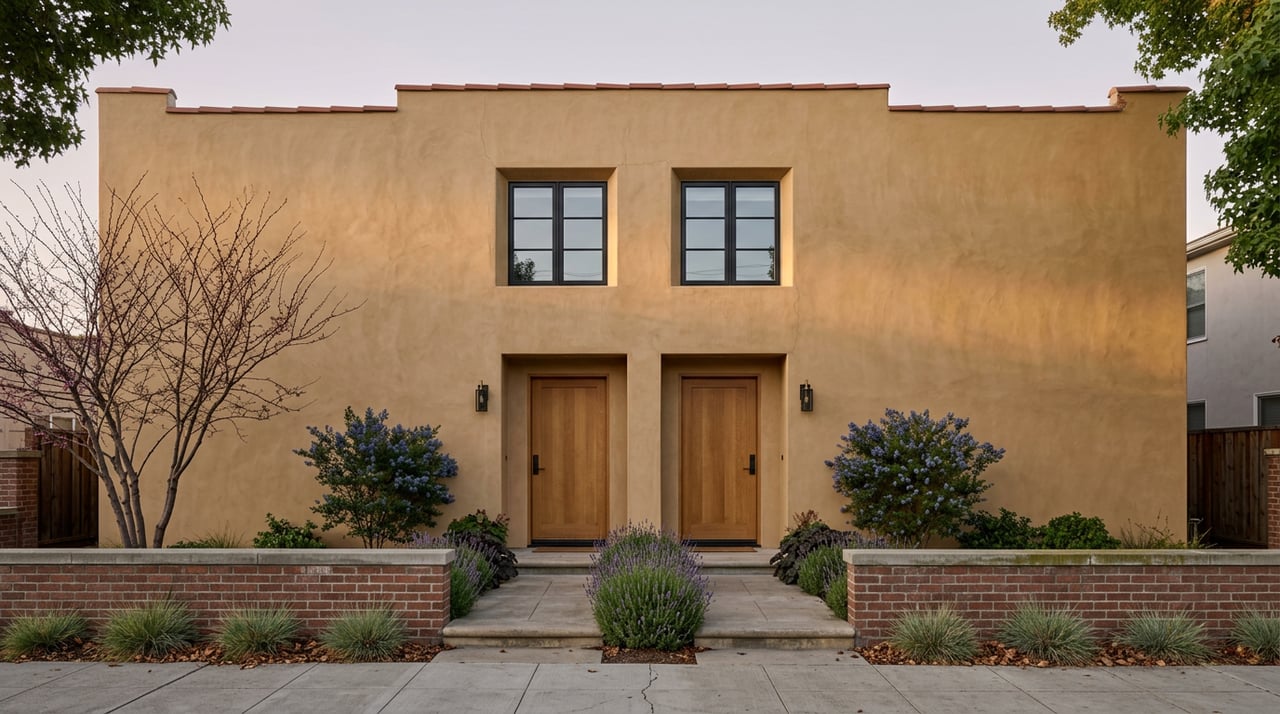
Oakland Duplex and Triplex Eviction Rules Sellers Overlook
August 27, 2026
August 27, 2026
A seller in the Oakland hills calls with a straightforward request. She owns a triplex, lives in one unit, rents the other two, and now has a buyer who wants to move his family into all three. Her assumption, a reasonable one, is that because she occupies the building herself, none of Oakland's tenant protections apply to her the way they'd apply to a landlord across town with an apartment building full of long-term renters. She is half right, and the half she has wrong is the half that can stall a closing.
Oakland's own coverage materials answer this cleanly, and the answer surprises almost every small owner who hasn't looked it up. Follow the row for an owner-occupied duplex or triplex on the city's Rent Adjustment Program flyer and you'll find two separate columns. Rent control: No. Eviction protection: Yes. Those two ordinances get treated as a package deal by most people who own a two- or three-unit building here. They aren't. One exempts you. The other doesn't. And the gap between them is exactly where a sale can go sideways if nobody checks it before the offer is accepted.
Oakland runs its tenant protections through two distinct pieces of law: the Rent Adjustment Ordinance, which caps how much rent can go up each year, and the Just Cause for Eviction Ordinance, which limits the reasons a landlord can ask a tenant to leave. They cover overlapping but not identical ground.
| Property type | Rent control | Eviction protection |
|---|---|---|
| Owner-occupied duplex or triplex | No | Yes |
| Rented single-family home | No | Yes (if built more than 10 years ago) |
| Apartment building, certificate of occupancy before 1/1/1983 | Yes | Yes |
| New construction with certificate of occupancy within the past 10 years | No | No |
The duplex and triplex carve-out from rent control exists because Oakland has long recognized a different relationship between an owner who lives in the building and one who doesn't. Voters closed the parallel eviction exemption back in 2018 through Measure Y, and Measure V extended just-cause coverage further in 2022 to most residential rentals built more than ten years ago, single-family homes and condos included. So a rented single-family home in Oakland, something plenty of buyers assume is the simplest, least encumbered property type in the city, still comes with eviction protections attached if it's more than a decade old.
Here's the detail that catches people off guard most often. Oakland's ordinance lists specific, enumerated grounds a landlord can cite to end a tenancy, and the sale of the building is not one of them. A closing does not, by itself, give anyone standing to ask a tenant to pack up. Title can transfer on a Tuesday and the lease keeps running exactly as it did the week before, because a change of ownership doesn't terminate an existing tenancy under California or Oakland law.
If a buyer wants the property vacant, the path runs through a specific just-cause ground: owner move-in, sometimes called owner or relative occupancy. That ground comes with its own paperwork, its own notice period, and its own price tag, and all three should be priced into a purchase before anyone signs.
An owner-move-in eviction in Oakland requires a 60-day written notice, and the relocation payments due to the departing tenant are fixed by the city and adjusted every year on July 1. Under the schedule that ran through June 30, 2026, the numbers worked out to roughly $8,107 for a studio or one-bedroom unit, just under $9,977 for a two-bedroom, and about $12,316 for a three-bedroom or larger, with an additional $2,500 per unit owed if the household includes a low-income, elderly, or disabled tenant, or minor children. Tenants who've lived there less than two years receive a reduced amount. Because the figures reset annually, anyone budgeting for owner move-in today should confirm the current schedule directly with Oakland's Rent Adjustment Program rather than relying on last year's numbers.
Multiply that across two rented units in a triplex and the number stops being a rounding error in a purchase negotiation. It's a line item that belongs in the offer discussion, not a surprise that surfaces after the buyer has already waived contingencies.
There's a timing wrinkle too, and it has nothing to do with money. If the household in question includes school-age children, or an Oakland Unified School District employee who's lived in the unit at least 90 days, the owner-move-in notice can't be timed to expire during the regular school year. A buyer counting on possession by a specific closing date needs to know whether that date lands inside a school calendar that isn't theirs to move.
Oakland's rent registry took effect in July 2023, and property owners are required to register covered units and renew that registration every year by March 1. An owner who hasn't kept the file current can run into real limits: they may not be able to serve a valid rent increase, and for units covered by the just-cause ordinance, failure to register can become an affirmative defense a tenant raises in an eviction proceeding, including one over unpaid rent.
Picture the triplex owner again. Her buyer is counting on a clean owner-move-in eviction to take possession. If her registration lapsed two years ago and nobody noticed, the tenant's attorney now has a documented reason to slow the whole process down, right when the buyer's rate lock and moving timeline depend on speed. A seller can check current status directly at rentregistry.oaklandca.gov before a property ever hits the market, and it takes a fraction of the time it would take to untangle after an offer is in hand.
For a seller with tenants in place, the sequence matters. Confirm registration status first. Understand which just-cause ground actually applies if a sale hinges on vacant delivery, and price the relocation obligation into the negotiation rather than treating it as the buyer's problem to solve later. For a buyer picturing an owner-occupied duplex as a straightforward move-in, the more useful question isn't whether rent control applies. It's whether eviction protections do, what ground would be needed to end an existing tenancy, and what a 60-day notice and relocation payment do to the actual move-in date.
None of this makes small multifamily property in Oakland a bad idea. Two- to four-unit buildings make up a meaningful share of the city's housing stock, and that isn't changing. It just means the due diligence list for a duplex looks different from the list for a single-family home, and the difference lives in ordinance language most buyers never read until it's already relevant.
Does selling my property end my tenant's lease automatically? No. A title transfer doesn't terminate a tenancy. The new owner inherits the existing lease and the tenant's protections exactly as they stood the day before closing, so plans for vacant possession need their own legal path.
If my duplex isn't rent-controlled, can I raise the rent as much as I want? Being outside the Rent Adjustment Ordinance means the city's rent caps don't apply, but statewide law still sets an outer limit on annual increases for most rental housing. The bigger practical constraint for an owner-occupied duplex is usually the just-cause side, not the rent side.
What if my unit is exempt because I share a kitchen or bathroom with my tenant? Oakland's shared-facilities exemption applies to any property type where the owner lives in the unit and shares a kitchen or bath with the tenant, not specifically to duplexes. It's a separate exemption from the owner-occupied duplex or triplex carve-out and worth confirming on its own terms.
Is a single-family rental simpler than a duplex? Not necessarily. A rented single-family home is generally exempt from Oakland's rent caps, but if it was built more than ten years ago it's still subject to just-cause eviction protections under the ordinance as expanded by Measure V.
Small multifamily property rewards owners who read the fine print before they need it, not after. If you're weighing a purchase or a sale of a duplex or triplex anywhere in Oakland, Albany, Berkeley, El Cerrito, or Kensington, Tracy Zhou has spent years walking clients through exactly these details, the ones that don't show up on a listing sheet but decide how smoothly a closing actually goes. Let's Connect.
Stay up to date on the latest real estate trends.


remodel
before the first wall comes down
Tracy understands that whether buying or selling a home or an investment property, the decision is an important one. She helps clients invest in their real estate dreams by putting their interests first. Work with Tracy today!