Kensington View Home Premium and the Tree Ordinance
August 20, 2026
August 20, 2026
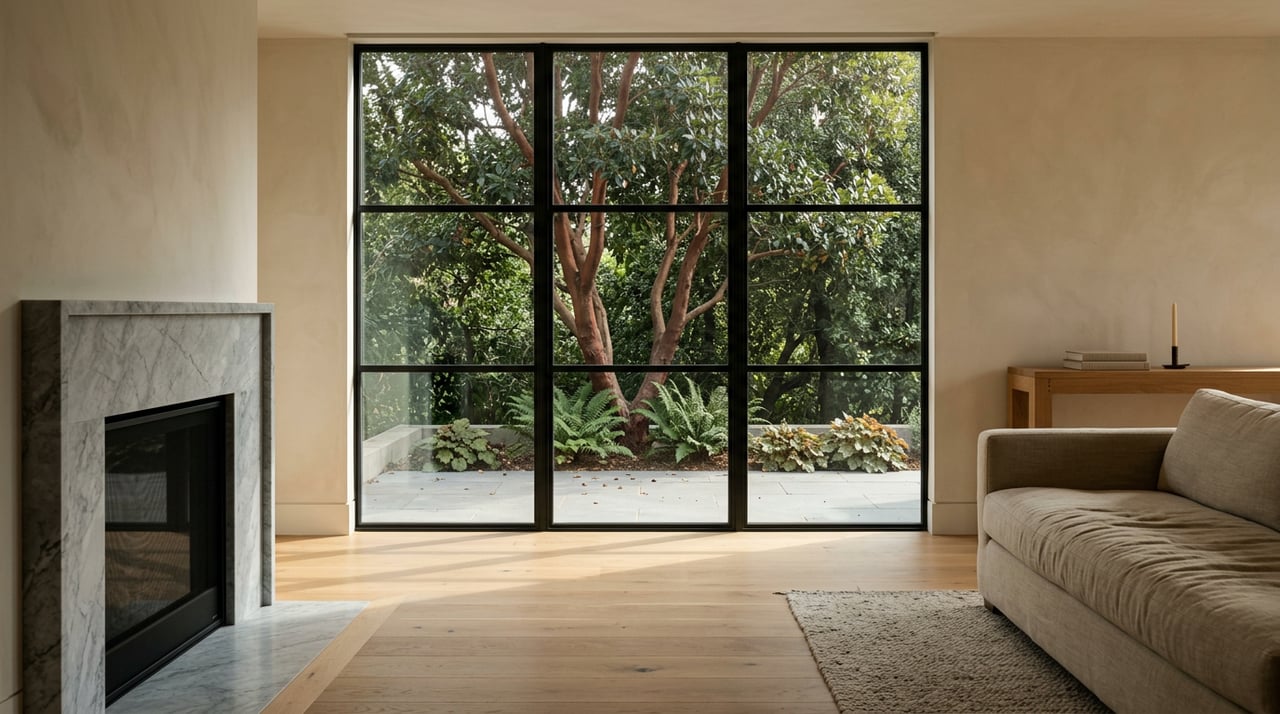
Two homes go on the market three blocks apart in Kensington within the same month. Same era, same square footage, same walk to Colusa Circle. One has an open shot of the Bay and the Golden Gate from the living room. The other has a partial view, a wedge of water visible between two mature oaks on the downhill neighbor's lot. The first sells for markedly more than the second, even though nothing else about the two houses would explain the gap.
Every hillside market in the East Bay has some version of this story. What's different in Kensington is why the gap holds so consistently, and why it's worth understanding before you fall in love with either house.
Anyone shopping Kensington right now has already seen the headline numbers. Current portal data puts the median sale price around $1.625 million, up roughly 9 percent from a year earlier, with homes typically going under contract in about 21 days. Those numbers describe a tight, competitive market, but they don't explain the internal pricing structure buyers actually encounter once they start touring.
Recent market commentary on the 2026 Kensington market has been blunter about what's really happening under the median: pricing is segmented by view quality in a way that produces a narrow band for each micro-location, and homes with unobstructed Bay views consistently outprice partial or filtered-view homes of similar size. That segmentation isn't a soft preference. It's closer to a rule.
The question worth asking is why that rule is so rigid here, in a town of roughly 2,200 homes wedged into the hills between Berkeley and El Cerrito, when plenty of other hillside neighborhoods around the Bay have similar topography and similar views without the same pricing discipline.
The answer sits in Contra Costa County's zoning code, in a section that applies to exactly one place: unincorporated Kensington. It's called the Tree Obstruction of Views Combining District, usually shortened to the -TOV ordinance, and the county is explicit that it applies only in unincorporated Kensington, not in El Cerrito, not in Berkeley, not anywhere else in the county.
The ordinance was adopted in 1984 and sat mostly unchanged for four decades until the Board of Supervisors approved a substantial revision, Ordinance 2024-21, on November 12, 2024. The update clarified the process for property owners seeking to restore a view or sunlight access lost to a neighbor's tree growth, and it created a formal Tree Arbitration Board appointed by the county to hear disputes. That board isn't theoretical. It holds public meetings, including sessions at the Kensington Library on Arlington Avenue, to review specific view claims under Chapter 816-2 of the county ordinance code.
This is a genuinely unusual thing for a residential zoning code to do. California law generally gives property owners no right to an unobstructed view over a neighbor's land. Kensington's TOV ordinance is one of the narrow local exceptions that courts have recognized as creating something closer to a right, though a limited one. A Contra Costa Superior Court ruling on the ordinance made the boundary clear: property owners in Kensington are subject to a rule that acknowledges some right to a view, but that right isn't absolute, and the ordinance exists to provide a process for resolving competing interests rather than a blanket ban on any interference.
The process has three stages, and each one matters for anyone trying to understand what they're actually buying or selling.
That third step is the part sellers and buyers tend to underestimate. A prior Tree Arbitration Board decision isn't just a resolved neighbor dispute. It's evidence a court will lean on if the same view is contested again later.
Here's the mechanism that actually explains the pricing gap between the unobstructed-view house and the partial-view house down the block. The TOV ordinance doesn't protect a view in the abstract. It protects the view and sunlight access that existed at the time the current owner purchased the property. The county's own explanation is specific on this point: the ordinance exists to restore views and sunlight lost to tree growth on a neighbor's property, without creating any greater right to a view than existed when the owner bought.
That single clause does a lot of work in a hillside market. It means a "view" in Kensington isn't just a physical fact about elevation and sightlines. It's effectively a claim staked at a point in time, backed by a county process that will help enforce it if a neighbor's tree grows into it later. A house with a fully open Bay view today has a legal basis to keep that view open even as trees around it mature. A house with a partial or filtered view has a legal basis to pursue restoration only back to whatever the view looked like on the day its current owner closed escrow, not to whatever view existed decades earlier or might exist in an ideal world.
That's why the pricing bands stay narrow. Buyers aren't only paying for what they see on the day of the showing. They're implicitly paying for how defensible that sightline is likely to be five or fifteen years from now, and the TOV ordinance is the only thing in the region that puts a real process behind that defense.
For sellers of a genuine view home, the practical move is to document the view's history before listing, not after an offer comes in. If a previous owner ever went through mediation or arbitration under the TOV ordinance to establish or restore the current sightline, that record is an asset. It shows a buyer the view isn't just current, it's already been tested and reinforced through the county's process.
For buyers looking at a partial or filtered view home, the useful question isn't "will this view get better." It's whether the obstruction is recent enough, and the change measurable enough, that a future TOV claim would have something to point to. The ordinance restores what existed at your purchase date going forward, so a tree that's been blocking a sightline for twenty years before you buy doesn't give you the same claim as growth that happens after your closing date.
And for anyone assuming they can simply ask a neighbor to trim a tree once they own the home, it's worth knowing this isn't a fast or informal process by design. Reconciliation and mediation come first, arbitration is the fallback, and court is the last resort. Kensington's TOV ordinance exists precisely because the county recognized that view disputes in a densely wooded hillside community needed a structured path, not a free-for-all.
Does the TOV ordinance apply in El Cerrito or the Berkeley hills too? No. The county is explicit that this ordinance applies only within unincorporated Kensington. Adjacent hillside areas in Berkeley and El Cerrito are governed by their own city processes, not this county overlay.
Is this the same as the rule that stops new construction from blocking a view? No. The TOV ordinance addresses tree growth specifically. A separate rule, the Kensington Overlay Planning Ordinance, governs view blockage caused by building construction, and the two processes are handled differently.
Can a new owner file a TOV claim right after closing? The ordinance is built around restoring the view that existed at the time of purchase, so the relevant reference point is the sightline the buyer actually had when they bought. A claim would need to establish that a neighbor's tree has grown beyond that baseline since the purchase date.
Kensington's view premium isn't a mystery once you see the mechanism behind it. It's not just elevation and luck. It's a market where one town's zoning code quietly does the work of protecting what buyers are paying for.
If you're weighing a view home against a partial-view home in Kensington, or trying to figure out what a past tree dispute means for a property you're considering, Tracy Zhou has spent years reading exactly this kind of local fine print for East Bay buyers and sellers. Let's Connect.
Stay up to date on the latest real estate trends.
remodel
before the first wall comes down
Tracy understands that whether buying or selling a home or an investment property, the decision is an important one. She helps clients invest in their real estate dreams by putting their interests first. Work with Tracy today!